Home
Sunscreen Guide · SPF Daily Guide

Sunscreen application guide
How much to use and when to reapply

Sunscreen is the most fundamental step for reducing UV damage and slowing skin aging. Even so, many people apply far less than the recommended amount or skip reapplication, which brings the actual protection they receive well below what the label suggests. This guide covers how much to apply and when to reapply, based on testing standards and dermatology guidelines.

KFDA Sunscreen Efficacy Testing Standards · AAD Guidelines · Updated June 2026

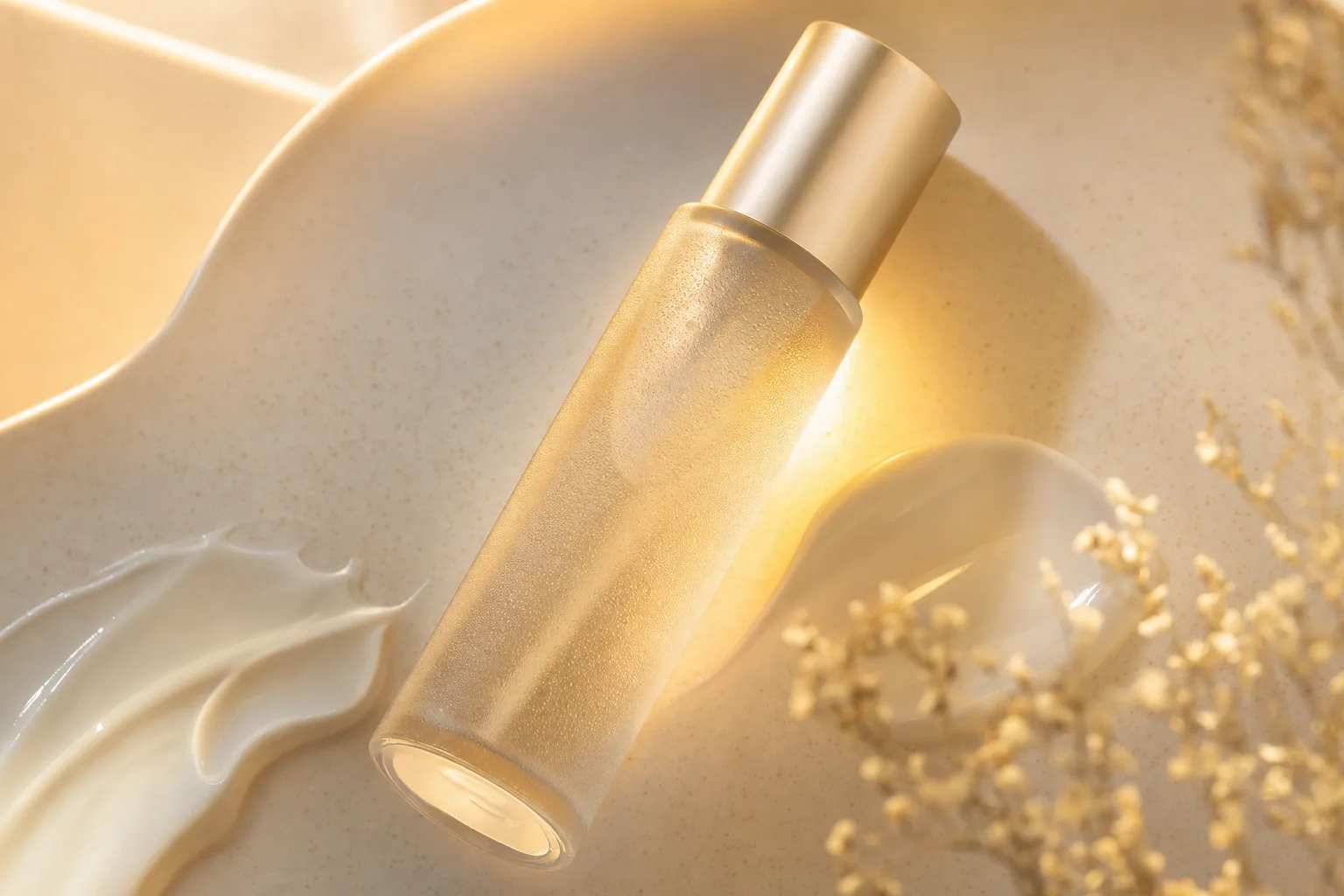
A slim frosted sunscreen bottle catching warm backlit golden light on a warm cream ceramic surface, editorial macro photography
A Two-Fold Principle

Two things that determine how well your sunscreen works

01. Amount

Enough product for the SPF to perform

The SPF number on a product is tested at 2 mg per cm² of skin. Applying less than that produces less protection than the number suggests. Using enough to cover your face evenly is as important as the SPF rating itself.

02. Reapplication

Reapply every two hours to maintain protection

UV filter ingredients gradually break down as they absorb UV radiation and sweat and sebum reduce coverage further. During time outdoors, reapply every two hours and immediately after swimming or heavy sweating.

How well sunscreen works is not determined by the SPF number alone. How much you apply and how often you reapply governs how much UV radiation actually reaches your skin. Even an SPF 50 product delivers less protection than its label states if you apply too little or skip reapplication.

What the SPF number is actually measuring

Korea's KFDA, along with international testing standards, measures SPF by applying 2 mg of product per cm² of skin. The number on the label is the protection level at that specific application amount. SPF 50 means SPF 50 only when you apply that much.

Most people apply considerably less than this in practice. The less you apply, the further the real protection falls below the stated number, which is why applying enough and spreading it evenly matters as much as which product you choose.

How much is enough for the face

To cover the full face, including forehead, cheeks, nose and chin, plus the neck and ears, around 1.5 mL is the reference amount. If that is hard to visualize, squeezing a strip across two fingers laid side by side and applying in sections is a practical approach.

Most people use less than this. If your application feels thin, dividing it into two passes and patting each one in evenly tends to give better coverage than trying to spread a large amount in one go.

Ears and neck matter too

The ears, the skin around the eyes and the neck are the areas most often missed. These areas have thinner skin and see a lot of incidental sun exposure, which is why pigmentation and early fine lines tend to appear there first. Including them in your routine is worth the extra few seconds.

Editorial Tip

Two thin layers cover more evenly than one thick one

"Applying an SPF 30 in adequate amounts twice may give better real-world protection than a thin coat of SPF 50. The amount and evenness of coverage matter more than the number on the bottle."

— Beauty Dupe Editorial

Why UV filters lose effectiveness over time

Chemical (organic) UV filters work by absorbing UV radiation and converting it to heat. As they do this, the filter molecules gradually break down and their protective capacity decreases. Sweat, sebum and friction from clothing reduce the amount on skin further.

Mineral filters (zinc oxide and titanium dioxide) absorb and scatter UV radiation and are generally more resistant to photodegradation than chemical filters, but they are still washed off by sweat and water. Reapplication is necessary regardless of which type of filter your sunscreen uses.

When to reapply

The general guideline for outdoor time is every two hours, and immediately after swimming or heavy sweating. Water-resistant products maintain their protection for a stated duration of 40 or 80 minutes in water, but once that window has passed, they need to be reapplied.

When applying before going out, chemical filter sunscreens are typically recommended 15 minutes before sun exposure to allow absorption. Mineral filter products take effect immediately on application.

Reapplying over makeup

Applying a cream sunscreen directly over foundation or powder tends to move the makeup underneath. Formulas designed to be patted on, such as a sunscreen stick or cushion, work better in this situation. A stick is also convenient for small areas like under the eyes or the bridge of the nose.

Spray sunscreens are easy to carry but difficult to apply in sufficient, even coverage on their own. They work better as a supplementary step alongside another form rather than as the main application.

Indoors: when sunscreen is and is not needed

If you spend the day entirely inside and away from windows, the need for sunscreen is low. If you sit close to a window for extended periods or step outside at any point during the day, applying it is recommended. Standard window glass blocks most UVB but allows a meaningful amount of UVA through.

UVA penetrates deeper into the skin and is associated with pigmentation and long-term photoaging. If your usual spot during the day is near a window, sunscreen is a sensible habit. For a full breakdown of what SPF and PA ratings mean, see our SPF and PA ratings explained guide.

The Synthesis of Wisdom

Three pillars of effective sun protection

SPF rating, application amount and reapplication timing. Take away any one of the three and real-world protection drops below what the label promises.

01. SPF Standard

What 2 mg/cm² means

SPF is measured under international testing standards at 2 mg of product per cm² of skin. For the face, that is roughly 1.5 mL, more than most people actually apply. Matching the test conditions is the only way to get the protection the label states.

02. Photodegradation

How UV filters break down

Chemical filters degrade a little with every burst of UV they absorb. Add sweat and sebum to the mix and coverage decreases over the course of the day. Mineral filters resist photodegradation better but are still removed by water and perspiration, so reapplication applies to both types.

03. Reapplication

The two-hour guideline

The American Academy of Dermatology and other major dermatology bodies recommend reapplying every two hours during outdoor activity. Water or heavy sweating calls for an immediate reapplication regardless of how long it has been since the last one.

It is easy to assume that one morning application lasts all day. But UV filters break down with every dose of UV they absorb and sweat reduces coverage further. On any day with meaningful time outdoors, reapplying every two hours is the most reliable way to keep protection at the level you expect.

Beauty Dupe Editorial

Frequently asked questions

Does applying less sunscreen reduce the SPF protection you get?

Yes, it does. The SPF number is measured at 2 mg per cm² of skin. Using less than that means your actual protection is lower than the label states. Applying enough to cover your face and neck evenly is the most important factor.

Do I need sunscreen indoors?

If you spend the full day inside and away from windows, the need is low. If you sit near a window for long periods or will step outside briefly, applying it is the safer call. Standard glass blocks most UVB but lets a significant amount of UVA through, and UVA is the type that drives photoaging and pigmentation.

How do I reapply sunscreen over makeup?

A sunscreen stick or cushion that you pat on rather than rub works well without disturbing the makeup underneath. Spray formulas are portable but hard to apply in sufficient, even amounts on their own. Using a stick or cushion as your main reapplication and a spray as a top-up is a practical approach.

Do I need sunscreen on cloudy or rainy days?

Yes. Clouds and rain do not fully block UVA, and a meaningful amount of UV radiation reaches the ground even on heavily overcast days. Applying sunscreen before any outdoor time remains the recommendation regardless of the weather.

Skin Warning

Take care to keep sunscreen out of your eyes. If irritation around the eye area persists, switching to a mineral filter formula or one specifically formulated for the eye area may help. If a skin reaction continues, stop use and consult a dermatologist.

Sources

Disclaimer · This guide is general information and does not replace a personal skin diagnosis. If irritation or a skin reaction occurs, stop use and consult a dermatologist.
Continue Exploring

Keep reading

SPF guide SPF and PA Ratings Explained
Routine guide Skincare Layering Order
Skin science Intrinsic vs Extrinsic Skin Aging
Start Your Analysis

What is actually in your sunscreen?

Enter any skincare product and our AI breaks down the key ingredients, then finds budget alternatives with a similar formula.

Analyze ingredients
한국어