Propolis guide A bee-derived soothing and antioxidant ingredient
Propolis is a natural material that bees make by mixing resin gathered from tree buds with beeswax and enzymes. Bees use it to keep the hive clean, and the flavonoids inside it give propolis its soothing and antioxidant benefits. It is gentle enough for breakout-prone skin and familiar from K-beauty ampoules. Here is how it works and what to watch for.
Cosmetic ingredient science · Dermatology references · Updated September 2026
A Two-Fold Principle
Two ways to understand propolis
01. Antioxidant
Easing the load of aging
Propolis is rich in flavonoids, a group of antioxidant compounds. They help mop up the free radicals (oxidative stress) that speed up aging, so skin copes better with daily stress.
02. Soothing
Calming and breakout care
It calms irritated skin and helps keep bacteria from multiplying, which makes it useful for skin that breaks out easily. It supports gently rather than pushing hard.
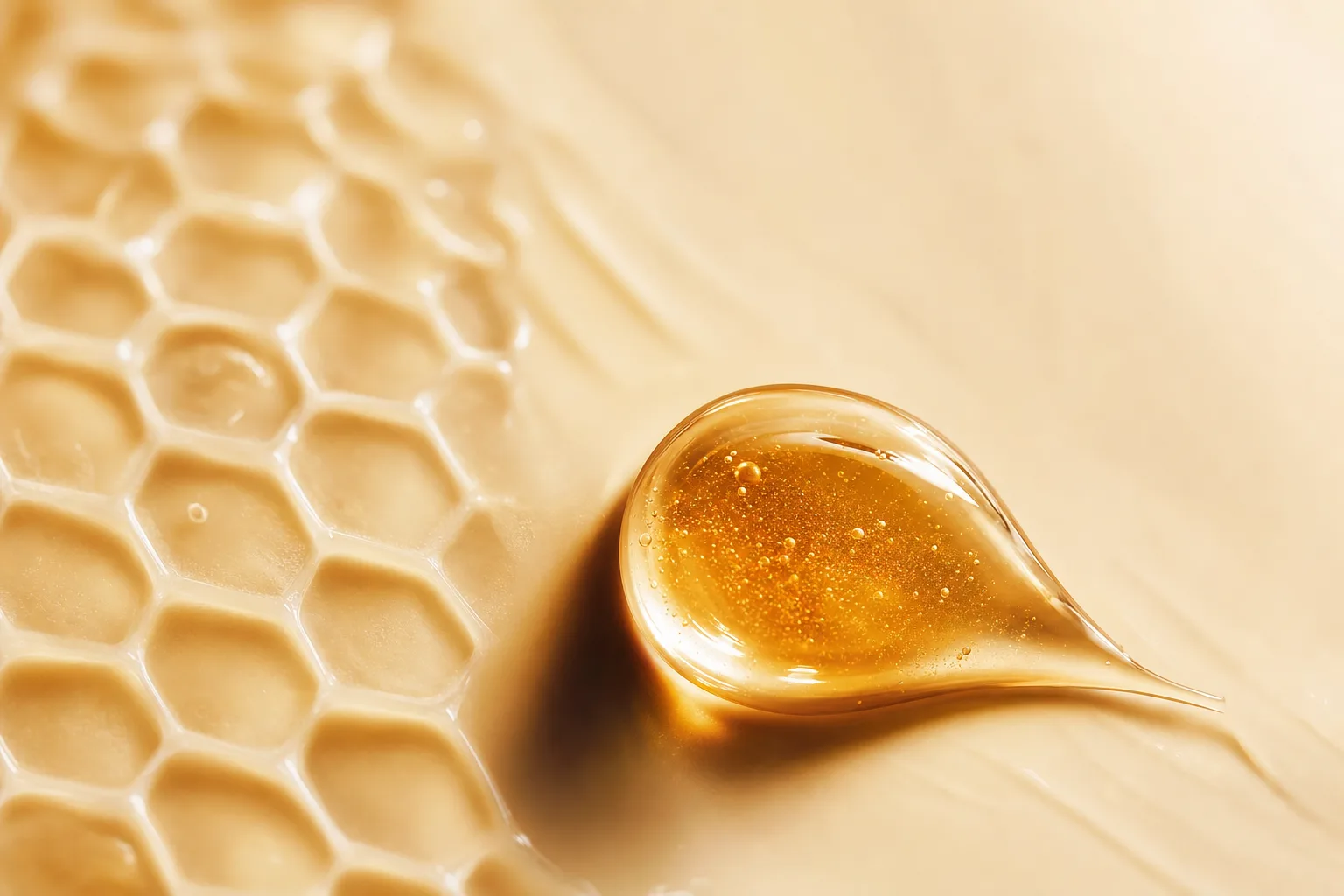
Propolis is a natural material made by bees. A honeybee gathers sticky resin from tree buds and bark, then mixes it with enzymes in its saliva and with beeswax to seal gaps in the hive. The point is to protect the hive from bacteria and fungi, and in the process the material becomes rich in compounds like flavonoids and phenolic acids. That is exactly why it shows up in skincare as a soothing, antioxidant ingredient.
What propolis is
The name is said to come from the Greek word for city, polis, with the sense of a wall that guards the hive. Its color runs from yellow to deep brown depending on the trees it came from, and it has a sticky resin texture.
The compounds of interest are flavonoids and phenolic acids. Both are made by plants to protect themselves, and both are well known for antioxidant and antibacterial action. One thing to keep in mind is that propolis varies by the region and the trees it was gathered from, so the compounds and their amounts differ. That means concentration and character can differ from product to product, so it helps to check how much is listed.
How it works in skin
The flavonoids in propolis act as antioxidants. Free radicals (oxidative stress) from UV light and stress wear out skin cells and speed up aging, and antioxidants help neutralize them. So skin is less worn down by outside stress and dulls more slowly.
On the soothing side, it helps calm the inflammation that irritation brings on. It also holds back the growth of bacteria, which supports skin prone to mild acne and breakouts. It is not a heavy hitter the way salicylic acid or benzoyl peroxide can be, but its gentleness makes it easy to use over time.
Advertisement
Which skin concerns it addresses
Skin concern
What to expect
Note
Mild breakouts and acne-prone skin
Curbs bacterial growth and calms inflammation to ease the breakout load
Pair with professional care for severe acne
Sensitive, easily reddened skin
Soothes irritation and helps skin settle
Patch test if you have any allergy history
Skin worn down by environmental stress
Antioxidant action reduces free radicals and slows dullness
Works better alongside sunscreen
Dry, tight skin
Helps hold moisture when blended with hydrating ingredients
Pair with hyaluronic acid or ceramide
Rather than delivering one strong effect, it supports soothing, antioxidant action, and hydration together, so it fits easily into daily care. Its benefit and safety depend on how much is included and what else is in the formula, so treat the ingredient list as your starting point when choosing a product.
Ingredients that work well with it
Niacinamide (vitamin B3) pairs well. The two work at different points, so they do not clash, and you can expect soothing and oil control together. Our niacinamide guide covers more.
Centella (cica) reinforces the soothing side when used together. Both are used to calm irritated skin, so the pair suits sensitive skin. See our centella guide.
Hyaluronic acid or ceramide add hydration alongside the calming benefit, which works well for dry, sensitive skin.
Editorial Tip
Gentle, but patch test anyway
"Propolis is gentle for most people, but it is a natural material made by bees, so it can trigger an allergic reaction in some. Apply a new product behind the ear or on the inner arm first, watch it for about a day, then use it on your face."
— Beauty Dupe Editorial
The allergy caution
Propolis is known as a soothing ingredient, but it is also reported as a possible allergen. It carries the plant compounds the bee collected, and some of those can trigger contact dermatitis in sensitive people. Across patch test studies, roughly 1 to 7 percent of people tested reacted to propolis.
Take extra care with a bee-product allergy: If you have ever reacted to honey or bee-sting related products, be cautious with propolis too.
Start on a small area: Apply a new product behind the ear or on the inner arm first, watch it for about a day, then widen to the face.
Stop if a reaction lingers: If itching, redness, or swelling does not settle, stop using it and let the skin calm down. See a dermatologist if symptoms are severe.
The Synthesis of Wisdom
Three things that define propolis
A natural material made to guard the hive, the antioxidant and soothing work of its flavonoids, and the allergy caution. Know these three and you can choose propolis well.
01. Origin
A natural resin that guards the hive
Bees make it from tree-bud resin mixed with beeswax and enzymes. Because the point is to protect the hive from bacteria and fungi, it is rich in compounds that help with antibacterial and antioxidant action.
02. Flavonoids
The two jobs of its flavonoids
Flavonoids, the heart of propolis, handle both antioxidant action that reduces free radicals and soothing that calms irritation. They support gently rather than pushing hard.
03. Caution
The allergy caution
Natural does not mean risk-free. It can cause contact dermatitis in some people. If you are sensitive to bee products, be extra careful and start with a patch test.
"
Propolis is not an ingredient that pushes one strong effect. It gently supports soothing and antioxidant action. Natural does not always mean gentle, so start with a patch test to see whether it suits your skin.
Beauty Dupe Editorial
Frequently asked questions
What skin types is propolis good for?
It suits irritated, sensitive skin and skin that breaks out easily. It is a good choice when you want soothing and antioxidant support in one ingredient. If you have an allergy to bee-related products, patch test first.
Is propolis a fermented ingredient?
No. It is a natural resin that bees collect from tree buds and mix with beeswax and enzymes from their saliva. Bees make it to seal and protect the hive, which is why it carries compounds that help with antibacterial and antioxidant action.
Can I use propolis with niacinamide?
Yes. The two work at different points, so they do not clash, and you can expect soothing and oil control together. Patch test any new combination on a small area for about a day before applying it more widely.
What should I do if a propolis product makes my skin itch or turn red?
Propolis can cause an allergic reaction in some people, though it is uncommon. If itching or redness persists, stop using it, let the skin settle, and switch to a product with different ingredients. See a dermatologist if symptoms are severe or do not clear.
Skin Warning
Propolis is natural, but it can cause an allergic reaction in some people. Be especially careful if you have ever reacted to honey or bee-sting related products, and always start a new product with a patch test. If itching or redness lingers, stop use and consult a dermatologist.
Disclaimer · This guide is general information and does not replace a personal skin diagnosis. If irritation or breakouts occur, stop use and consult a dermatologist.